
How Slot Reels and Random Number Generators Work Together, Slot RNG Explained

RN Plain-English decode
Slot RNG explained plainly: how random number generators drive reel spins, why each result is independent, and how to check what a game promises.
A slot’s random number generator (RNG) decides the outcome of every spin before the reels ever move. The reels are only the display layer. The software picks a number, maps it to a reel position, and then animates the symbols spinning into place. Understanding that order of events clears up most confusion about “hot” machines, patterns and near misses.
What the RNG actually does on a slot spin
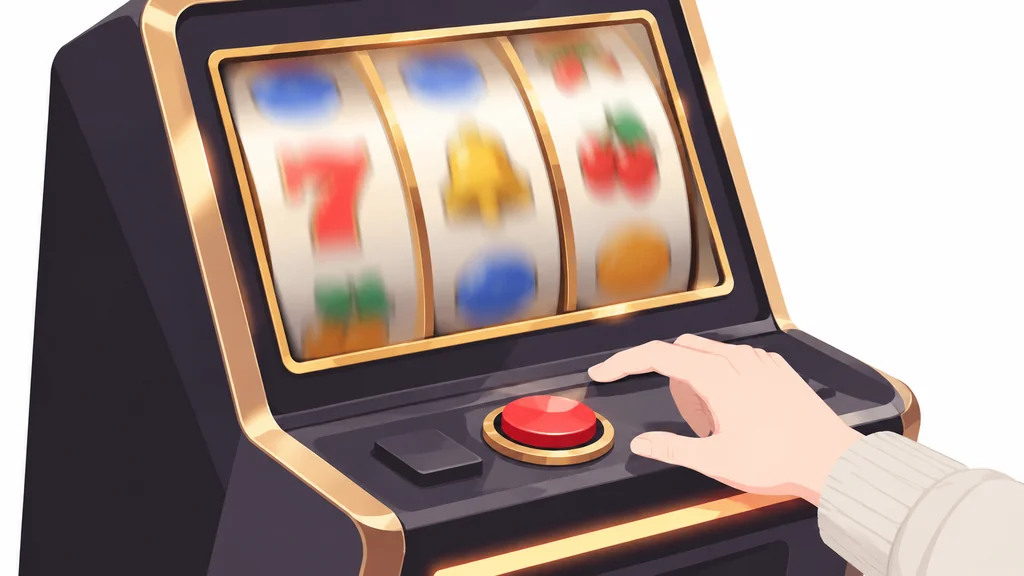
The Random Number Generator is a piece of software running continuously, producing a stream of numbers whether or not anyone is spinning. When you press the button, the game grabs the value the generator is producing at that instant and uses it to determine the result. The spin animation is generated afterwards, purely for show.
That sequence matters. If the visual result were decided first and the numbers fitted to it afterwards, the display could carry information about the outcome. In a properly built game it cannot, because the numbers come first and the animation simply plays out the result they produced.
The sequence has several practical consequences.
- Timing your spin changes nothing. There is no “better” moment to press the button, because the generator does not respond to the reels, your balance or your history.
- The previous spin is irrelevant to the next one. Each grab of a number is independent of the one before it.
- Changing your bet mid-session does not shift the generator’s output. It changes what that output pays, not what the output is.
- Switching machines or games starts a fresh stream. There is no carryover of “luck” either way.
Think of it like a lottery drawing that happens continuously, and your spin is simply the ticket you happen to hold at the moment you press. The draw was never waiting for you; you just caught one of its results.
From random number to reel position: the mapping step
The generator produces numbers, but reels display symbols. The bridge between the two is a mapping table built into the game’s mathematics. Each possible number range is assigned to a reel stop, and each stop carries a symbol. The distribution of numbers across stops is what sets how often each symbol appears.
This is where the Paytable, the rules and the RTP all live. A game does not need physical reels with a fixed number of stops per symbol the way a mechanical machine did. A digital game can weight symbol frequency however its designers choose, as long as the mapping stays fixed and the generator stays unpredictable. If you want to see how those symbol weights translate into prizes, the guide to reading a slot paytable walks through each column and number.
The RNG and the maths model have separate roles.
- The RNG is the source of unpredictability. It has no opinion about money.
- The maths model is the fixed rulebook that turns its numbers into symbols and pays. It has no unpredictability at all.
Confusing these two is behind a lot of bad advice online. The RNG being random does not mean the game is fair by default; the maths model being fixed does not mean the game is predictable spin to spin. You need both to be sound, and they are checked separately.
Why every spin is independent (and why patterns are an illusion)
Because the generator does not remember previous output, consecutive spins are independent events. A run of ten losing spins tells you nothing about the eleventh. A symbol that has not appeared for a while is not “due”, and one that has appeared three times in a row is not “hot”.
The human brain is very good at spotting patterns in random sequences, and it does so whether or not any exist. Three cherries followed by three cherries looks like a trend. In a truly random stream, clusters and gaps are expected; they are part of what randomness looks like. A sequence with no clusters at all would be suspicious, because real random data is lumpier than intuition suggests.
This is also why “machine memory” stories fail on their own logic. If the game tracked your losses and paid them back later, it would no longer be a random game, and the published return figure would mean nothing. The return is calculated across an enormous number of spins, and it describes the model as a whole. It says nothing about any individual session.
What “certified” and “tested” mean in practice
Testing can look at separate questions, such as whether the generator produces statistically random output and whether the maths model matches its published specification. A check of this kind does not guarantee you will win. It looks at whether the game behaves as described.
Whenever you are evaluating a claim, ask who checked it and exactly what they checked. A lab report typically covers two separate things.
- Generator quality. Does the output pass randomness tests, with no drift or predictable cycles?
- Model accuracy. Does the game pay out over a large sample in line with its stated return?
A game can pass one and fail the other. That is why reputable operators publish the testing lab’s name next to the game, and why the absence of any named lab is itself a signal worth noticing. If a site makes vague claims about “certified fair play” without naming a body, that is a claim to weigh rather than accept.
How RTP, volatility and the RNG fit together
The RNG supplies the randomness; the maths model supplies the long-run return. The published Return to Player figure describes what share of total stakes the model returns over a very large number of spins. It is a property of the model and says nothing about your session. A game with a stated return figure is not “due” to pay you that share back, and a short session can land far from that figure in either direction.
Volatility is the other half of the model. Two games can share the same return figure and feel completely different, because one pays small amounts often and the other pays large amounts rarely. Neither is “better” in an absolute sense; they suit different bankroll plans. The guide to understanding RTP in slots explains how to compare return figures across games without falling for misleading marketing.
- The RNG decides which outcome occurs on each spin.
- The model decides what that outcome pays and how often each outcome occurs.
- The return figure summarises the model over the very long run.
- Volatility describes how the payouts are spread, not how much is returned.
None of these tell you what the next spin will do. If someone claims they can, examine the claim itself. The game cannot predict the next spin.

Checking what a game promises before you play
You do not need access to source code to make a sensible judgement. What you need is the published information and a habit of reading it. Some operators may list the game’s supplier, its stated return figure and the testing lab somewhere on the game’s help screen or information panel.
A procedure that works on almost any platform has seven steps.
- Open the game’s information or help screen before placing a bet, not after.
- Find the stated return figure and note it, so you can compare it with other games you like.
- Look for the named testing lab or regulator reference on the game or the operator’s fairness page.
- Check the paytable for symbol values, wild behaviour and any bonus rules, because these define what the model pays.
- Note the volatility description in the game details if one is published, and match it to the session length you have in mind.
- Read the operator’s terms for anything about game availability, jurisdiction restrictions or bonus wagering, since these differ between operators and are where surprises usually hide.
- Keep a simple record of what you played and what you spent, so your own experience is data rather than memory.
If a step has no answer, that is information too. A game with no published return figure and no named testing body is asking you to take its behaviour on trust. Some players accept that. It is a choice, but it should be conscious.
It also helps to know where a site’s own incentives lie. The explainer on how casino affiliate sites make money shows why a glowing review is not the same as an independent test. And if a site’s terms and bonus conditions feel opaque, the comparison of cashback programmes is a useful exercise in reading both the small print and the headline.
Common beliefs about slot randomness, examined
Several ideas circulate so widely that they are worth addressing directly, because each one rests on a mistaken picture of how the generator works.
“The machine tightens up after a big win.” A big win is an output of the model. It does not come from a pool. There is no pool to refill. The generator does not know a win occurred.
“Slow spins pay better than fast ones.” Spin speed changes how many results you see per hour, which changes how quickly your balance moves through the model’s distribution. It does not change the distribution. Faster play means more spins, and more spins means the session’s outcome converges toward the model’s expectation faster, in whichever direction.
“The near miss means I almost won.” A near miss is a losing outcome that happens to look close to a winning one. The display is generated after the outcome is fixed, so the visual drama carries no extra information. The display can present results dramatically. That is a design choice, provided the underlying result is honest.
“A new game must be looser to attract players.” New games are built to whatever return the supplier and operator agree. A launch bonus is not part of the model described here, and a game’s age does not tell you how it behaves.
“Land-based machines and online slots work differently.” The physical reels on a mechanical machine really do stop where they stop, but modern cabinet slots use the same kind of software-driven result as online games. The maths model sits behind the display in both cases.

When to ask support, and what to ask
There are moments when reading the screen is not enough and a question to the operator is warranted. The most common is a discrepancy. The return figure on the game’s info screen differs from the one on the operator’s promotional page, or the paytable shows a symbol you cannot find in play. Ask for the specific figure and where it comes from.
Other situations may justify a support ticket.
- A game’s help screen names no testing lab and no supplier.
- Bonus terms mention game contributions or exclusions that are not clear from the promotion page.
- You want the complaint route if you believe a result was faulty, and the site does not publish one.
When you write, be specific. Name the game, the figure you saw and where you saw it. Vague complaints get vague answers, and a clear one creates a record you can refer back to. If the operator cannot or will not answer a basic question about a game’s published mathematics, treat that as an answer in itself.
For players in markets with local registration rules, it is also worth confirming which regulator the operator answers to before depositing, since the route for any dispute depends on it. The checklist for spotting scam or unlicensed casinos covers the licence checks that belong before any of this.
The short version
The generator picks the result, the model decides what it pays, and the reels animate the outcome after the fact. Every spin is independent, no pattern in past results predicts the next one, and the only reliable information is what the game publishes about its return, its supplier and who tested it. Read those three things before you play, and treat any claim that the next spin can be predicted as a reason to look elsewhere.
Slot RNG FAQ
Does the RNG stop when I am not playing?
No. The generator runs continuously, producing numbers whether or not anyone is spinning. Your spin simply captures the value being produced at that moment, which is why the timing of your button press cannot improve the result.
Can a slot be rigged so that it never pays?
A game can be built with a low return figure, which means it pays out less over the long run, but that is a published property of its model rather than a rigged outcome. A game whose actual behaviour differs from its published specification is a different and more serious matter, which is exactly what independent testing is meant to catch.
Why do near misses happen so often?
They are ordinary losing outcomes that the display presents in a dramatic way. Because the result is fixed before the animation runs, the visual closeness of a near miss carries no information about how close you came. It looks meaningful because it is designed to.
Is the RNG different in a live dealer game?
Live dealer games use a physical process for the cards or wheel, so the randomness comes from the shuffle or the spin rather than from software. The studio and the platform still publish rules and testing information, and the same advice applies. Read what is published before you play.
Do I need to understand the maths to play safely?
No. Check the stated return figure, check who tested the game, and set a spending limit before you start. Understanding the generator helps you ignore bad advice about hot machines and patterns, which is the practical benefit.